What if the spaces we create shape how we experience time itself?
Personal & Scholarly Origins
Your work bridges architecture, technology, environment, and human experience — what was the first moment you realized architecture wasn't just about buildings?
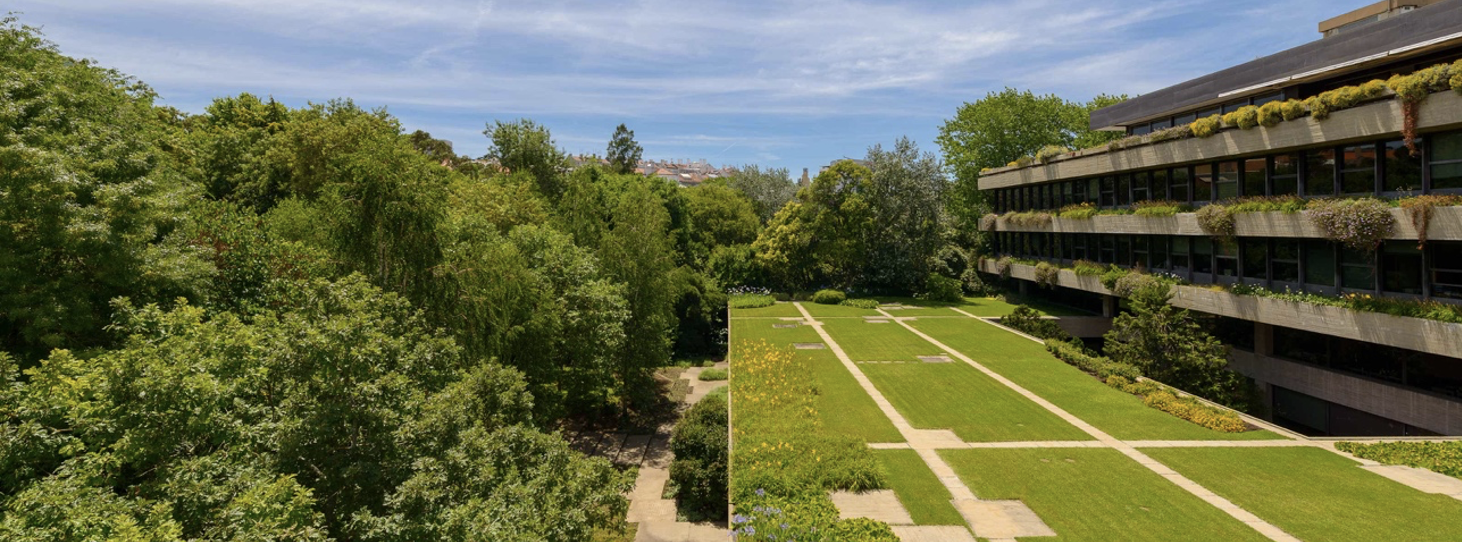
One of my earliest architectural realizations came from a building in Lisbon. The Gulbenkian Foundation houses an extraordinary art collection, a ballet and philharmonic auditorium, and even hosts a summer jazz festival. They also offered after-school activities for children, all set within their lush, expansive gardens. I remember visiting the space with my parents, the building and the gardens were both remarkable. The structure itself is a brutalist concrete, flat-roofed megastructure that forms a striking dialogue with the vibrant, foliage-rich landscape. Its interiors were minimal and stark, yet deeply intriguing. That contrast between the solid, sober architecture and the softness of the surrounding nature captivated me. It was probably because of this building that I became an architect.
Who was an early influence in your life that made you see architecture as a medium for cultural and human dialogue?
Interestingly, that first memory of the Gulbenkian building is a perfect example of the dialogue between culture and human interaction. It is a building that seamlessly brings together art, culture, human activity, and children's play. The best buildings are not only visually pleasing; they are versatile, allowing for multiple uses and interpretations over time. It is no surprise that some of the most enduring buildings — churches, hospitals, schools — have persisted even as their functions changed. Many European churches were once mosques or synagogues, hospitals were formerly convents, and prisons have been transformed into schools. This capacity to endure beyond their original purpose is a quality only truly great buildings possess. They are able to stand the test of time.
Rethinking Time & Architecture
Architecture unfolds over years, even decades; technology changes in months. How do you reconcile long-term architectural thinking with rapid technological shifts?
Architecture is analog; it is tactile in a way technology can never be. Some designers use digital tools for experimentation, space exploration, or visualization, but the final outcome is always physical and tangible. Virtual architecture is ultimately a simulation — a kind of game, never fully real. This is what we must reconcile: despite the growing use of technology, our aim is to create something real, something that must endure and remain meaningful for twenty five, fifty, or more years.
Do you believe architecture can help people reconnect with lived time?
Architecture is the most democratic form of art. When we walk through a city, any city, we move through a living, open-air museum. Urban streets are layered with traces of different eras, centuries, and sometimes even millennia. If we pay close attention to our surroundings, we notice that many of the streets and pathways we travel have existed for hundreds of years, holding history like a time capsule. One aspect I enjoy about filmmaking is how clever directors can use a familiar city and, simply by masking traffic lights or shopfronts, transport us decades into the past. This sensitivity to time becomes even more pronounced when we travel, because the unfamiliar environment makes us more aware of the differences in historical fabric.
Technology & Creativity
Some argue that digital tools democratize creativity — others worry they standardize design. Do you think technology ultimately expands or limits creative possibility in architecture?
Digital tools allow designers to work in new and diverse ways. They can foster creativity and introduce innovative design methods, when they align with a designer's vision. They are not suitable for everyone, and that is perfectly fine. There will always be exceptional designers who prefer working with physical models, sketches, and hand drawings — analogue methods. Some designers use digital tools primarily to produce construction documents, while others employ them both as production and creative instruments. This has been the case for decades. Designers like Zaha Hadid and Frank Gehry even created dedicated teams to collaborate closely with digital technologies, which in turn encouraged software developers to advance their tools and streamline design processes.
Today, AI has introduced even more possibilities, as well as new risks. It can generate ideas that might otherwise never be explored, expanding the creative landscape. However, for untrained designers, AI can also produce hyper-realistic yet unbuildable proposals that may mislead or distort expectations.
What unique human capacities do you think technology cannot replace in the creative process?
On one hand, human mistakes are what make us special. On another, humans have a unique sensibility and intuition that guide our decision-making. This becomes evident when using AI-generated images. Some AI-produced visuals can be compelling and aspirational, yet they often contain nonsensical elements that the system itself cannot recognise — flaws that even a child could identify within minutes. That intuitive ability to detect incoherence is something only humans possess.
Time, Attention & Cultural Value
Society increasingly values speed and efficiency — how does this mindset affect the way people understand architecture and built environments?
Architecture is a slow game. A project may take several years, depending on its scale and complexity, and the construction process can stretch even longer. From initial concept to completion, a building might take anywhere from a few years to an entire decade. Technology helps accelerate parts of both design and construction, and innovations such as prefabrication, automation, and 3D printing may significantly shorten construction timelines in the future. Regardless, speed and efficiency are not qualities typically associated with architecture and there is value in that. The slowness of the process, the waiting, and the anticipation often make architecture even more meaningful. The sense of expectation felt by a community awaiting a new bridge, station, or library is palpable. People cherish these moments.
If architectural education is becoming more technology-driven, what risks do you see for younger generations of designers in losing temporal depth or cultural awareness?
As an educator in higher education and as a parent, I often feel concerned for the new generations. The digital tools available today are incredibly useful and make life undeniably easier. However, I worry about what they might be doing to our brain plasticity, our memory, and our ingenuity. Growing up and training as an architect using pens, pencils, and physical models gave me a very different spatial awareness, an ability to solve problems and test solutions in ways my students may never truly experience. Even the act of building a virtual 3D model from scratch, rather than relying on AI to automatically generate a rendered perspective, develops a level of understanding and intuition that cannot be replicated.
Youth, Advice & Future Makers
What advice would you give to young designers and creators who feel overwhelmed by the pace of technological change?
The best way to tackle change is to engage with it: to understand the tools, explore them, and learn how they work. Even if it's not the path a designer ultimately wishes to follow, it is still essential to understand the potential, the dangers, and the risks associated with technological transformation. Some tools can be incredibly useful for expediting tasks and creating time-saving opportunities, but designers must remain aware of what is available and how to use those tools wisely.
What skills or mindsets do you believe the next generation must develop to navigate complexity without losing curiosity?
There is always a tendency to be lazy and to do the bare minimum. Yet speed and efficiency are essential to navigating today's world. Those who succeed will need to be resilient, adaptable, and flexible. A successful designer must demonstrate both analogue and digital skills, present a clear design vision, and draw on strong knowledge and memory of architectural precedents — in essence, a well-grounded architectural cultural awareness.
Creativity, Limits & Impact
How do you personally manage your own creative time — especially balancing research, teaching, practice, and reflection?
What I do, and what I advise my students to do, is to live, enjoy life, and balance work with intention. Architecture, like any creative activity, is fuelled by life itself, by our everyday experiences. Inspiration can come from anywhere: a great art exhibition, a film, a symphony, or the natural world. We simply need to surround ourselves with things that bring joy, pleasure, and admiration, because these inevitably filter into our work. In architecture, there are two essential components: work and inspiration. But inspiration is not the engine, not even the spark. At the beginning of any project, there is research, site analysis, precedent study, regulatory review, and the development of a clear brief. These activities are fundamental and do not rely on inspiration. Inspiration emerges while we work, often when we least expect it. Many times, I go to bed thinking about a problem that needs solving and wake up with the answer. Likewise, when I struggle with a design idea, a sudden image may appear and spark a new strategy.
Architecture & Societal Responsibility
Architecture can be a medium of inclusion or exclusion — how do you think architects should confront issues like inequality, climate urgency, or social fragmentation?
As mentioned earlier, architecture is one of the most democratic forms of art. We can experience great buildings everywhere. Public buildings welcome everyone, and their beauty and spatial qualities can be enjoyed by all. A great art gallery, a library, even an airport can redefine beauty in ways that belong to all of us. Yet, increasingly, the neo-liberal city model produces areas that are exclusive, inaccessible to most, and shaped by control and surveillance, limiting our collective experience of the city. Inequality can be felt through architecture. Extreme climate events reveal these inequalities even more sharply. The poor are disproportionately affected; energy poverty is a clear example, intensified when extreme weather demands buildings that are resilient and responsive. Fortunately, new generations of designers are being trained to use sustainable materials, rely less on energy-intensive methods, and create bioclimatic buildings that respond intelligently to climate and are kinder to the planet. I remain optimistic and hopeful.
Do built environments influence society's psychological relationship with time — and if so, how can architects design with temporal well-being in mind?
In the past, buildings were designed to endure. Over recent decades, however, architects have been trained to design structures with a life-cycle expectancy of only twenty to fifty years. This approach is not sustainable. While buildings inevitably require regular maintenance and cleaning, the absence of long-term vision is both problematic and wasteful. Profit motives and construction costs often drive this short-term mindset. Yet a shift in strategy — one that prioritises higher initial investment and a commitment to building for longevity — could mean constructing and reconstructing far less over time.
The "Deborah Benros Collection"
Imagine a curated collection representing your worldview.
Aldous Huxley — "Brave New World". A fantastic work of science fiction, Brave New World succeeds far better as a book than in any of its film adaptations. It portrays a dystopian society set within an urban context and imagines the city of the future, its beauty and its darkness, the promise of technology and its more unsettling consequences. The vividness of Huxley's descriptions and the mental effort required to visualise this urban reality make it an essential read for architects.
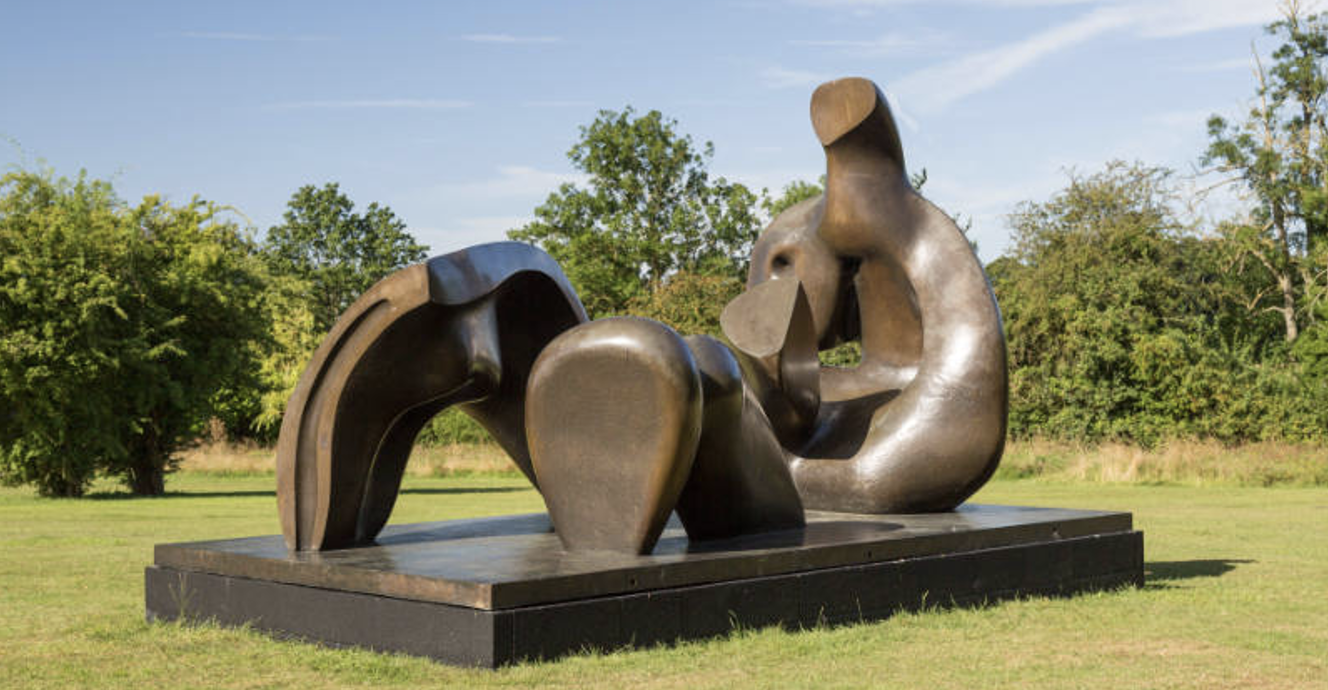
Henry Moore — "Three-Piece Reclining Figure, Draped", 1976. An abstract portrayal of the human body, neither distinctly female nor male, this sculpture invites multiple interpretations: reclining, lying down, or seated. Its beauty emerges through the spatial composition and the subtle echo of human gestures: an active, shifting torso, a resting knee, a twisting flank. Set within a courtyard that transforms throughout the year — from vibrant, foliage-rich greens in spring and summer, to deep autumnal reds, to a serene, snowy white in winter — the piece becomes a study in timelessness. It is beauty crystallised in time.
Ryuichi Sakamoto — "Merry Christmas Mr. Lawrence" is a beautiful instrumental piece, whimsical, atmospheric, and slightly abstract, allowing the mind to wander and dream. Lately, whether I am reading, working, or doing research, I find myself drawn to instrumental music, from classical to jazz, as long as the lyrics are minimal or absent, which helps me concentrate. It is said that this composition inspired the British band R.E.M. in their iconic "Losing My Religion", one of my all-time favourite songs. Sakamoto also influenced pianist and composer Bernardo Sassetti, another of my favourites.
Although recently I have been captivated by the power and potential of robotics and automation in the construction industry, I remain equally fascinated by the versatility of the devices we carry on our wrists and in our pockets — smartwatches and smartphones. Their capabilities are extraordinary: a minicomputer, a phone, a camera, a radio, a film player, a powerful calculator, and a set of maps all in one. Their utility is immense. Yet, I often feel a sense of sadness when I see people at restaurants absorbed in their screens rather than talking to one another; babies in public spaces pacified by devices instead of playing; teenagers in playgrounds staring at their phones instead of interacting with friends. I would gladly give all this technology up for a more present, interactive society.
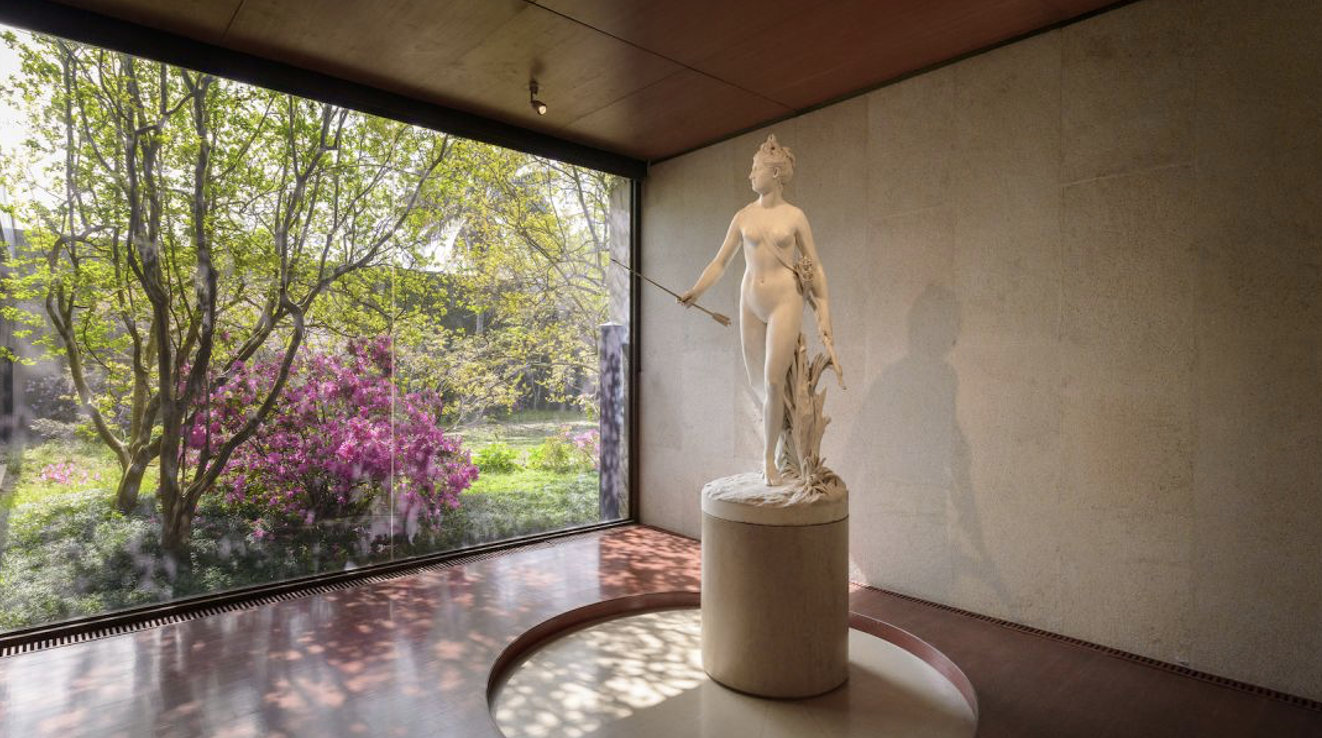
As mentioned, one of my all-time favourite buildings is the Gulbenkian Foundation in Lisbon. Designed by Pessoa, Cid and Atouguia in 1969, it is a beautifully solemn brutalist concrete structure, harmoniously balanced with the surrounding vegetation. Inside, the apparent weight and solidity of the architecture are softened by generous tinted glass panels framed in expressive bronze. Artwork punctuates the building both inside and out, from sculptures and murals to tapestries and even works by Impressionist masters, creating an environment where architecture and art coexist seamlessly. Nevertheless, any of Palladio's creations from five hundred years ago still surprise me. How can an architect designing villas and residential houses remain so profoundly relevant today? The answer becomes clear when visiting Villa Barbaro or my favourite, Villa Emo. Others, like Villa Pisani, continue to function as residences even after centuries of use.

My curated private collection would be in Portugal, west of Lisbon, along the coast where I was born. Facing the Atlantic Ocean and surrounded by the influences that have shaped my life, from architecture to art and music, it feels like the natural home for such a collection. The more I travel and discover the world, the more convinced I become that Portugal, and the Costa do Estoril in particular, is one of the most perfect places on Earth.
Vision on Global & Human Time
How can architecture and design help restore a sense of human rhythm in a world overwhelmed by pace and distraction?
People are often so absorbed in their devices that they no longer look around or observe. The practice of "people watching", once such an important and fascinating exercise, has almost disappeared. Painters, writers, journalists, and actors used to immerse themselves in crowds simply to observe human behaviour. Today, if someone sits quietly watching the world go by, they are more likely to be questioned than understood. Architecture, too, has lost some of its focus. It has become increasingly complex, burdened with services and technology, and in that process has sometimes lost its sense of wonder. People stopped being curious, partly because architecture lost some of its intrinsic magic, and partly because distraction became ubiquitous. At times, it feels as though architecture is competing for attention, relying on bells and whistles to captivate a gaze already overwhelmed by stimuli. Sometimes we simply need to return to a more essential place. To the essence.
Closing Reflection
Looking back on your career, what would you tell your younger self about time, patience, and creative courage?
Every decision I made brought me to where I am today. Each choice was considered and deliberate, and even the bad ones taught me something and allowed me to grow. One thing I firmly believe and can confidently attest, is that hard work always pays off. The results may not come immediately, but sooner or later the effort invested yields returns. Talent on its own is meaningless; it is hard work that consistently leads to success. I would advise my younger self to work diligently, learn as much as possible, rest, and then return to the work with renewed determination.
Time is a relative notion. We cannot change the past, the future remains abstract, and the present is the only dimension we can truly shape. The hard work we invest now will lead to meaningful future outcomes and form the foundation of our past memories. Maintaining a healthy balance between work and life is essential for overall well-being. Ultimately, how we choose to invest our time will define who we become.