What if time is not something we lose, but something we shape with meaning?
Personal and Creative Origins
Your work revolves around language, stories, and the human experience of time. Was there a moment in your life when you realised that storytelling is more than just a craft?
Spontaneously, I think it was the other way around for me. Language, listening, stories — all of it felt like it had always been part of me. Only later did I recognise that writing is also a craft. That I acquired over the years. Since I've been combining both — the intuitive and the precise — it feels right. Storytelling is not decoration for me. It is meaning. It is identity.
Since you help others articulate their stories, how has your own sense of time changed over the years?
In the past, time felt like something pressing. Something that slips away faster than I'd like. Today I experience time less as an adversary, more as a possibility. I've learned that what matters is not the length of a day, but its meaning. Conversations with people at the end of their lives have profoundly changed how I experience time. There, it's not pace that counts — it's presence.
Time and Life Stories
Most people see time as something that passes; you help people see time as lived stories. How would you describe the difference between chronological time and experienced time?
Chronological time measures in hours, days, years. Experienced time doesn't measure in length — it measures in depth. This becomes especially clear when I visit people who are confronting the nearness of death. Instinctively, I always took off my watch before those visits. Only later did I understand why: in the final phase of life, the question is less 'What is still to come?' and more 'What was — and what does it mean?'
Memory plays a central role in writing and storytelling — what does it reveal, in your view, about the way we structure our lives?
Memory is not a chronicle. It is a selection. What we remember shows what shaped us, what hurt us, what carried us. In memory, we don't organise our lives by calendar years, but by turning points. Memory reveals our inner dramaturgy. And often people only recognise, in the act of telling, that their life follows a thread — even if it felt chaotic in the middle of it.

Society, Culture & Shared Meaning
In a world obsessed with speed and productivity, how can we reclaim slowness as a method for thinking and making meaning?
First, we have to want it. And then we have to grasp that our time is limited. A conscious engagement with finitude helps us think differently about priorities — and set them differently.
Deep Reflection, Endings & Presence
What do people fear most when they are invited to revisit their lives through storytelling — and what do they discover instead?
I often hear: 'My life wasn't anything special.' Or: 'I'm not that important.' People believe their own story isn't worth telling. When they engage with it anyway and look at their life from a narrative perspective, something shifts. Suddenly they recognise connections. Things, phases, experiences begin to take shape. It's a bit like decluttering a house with many rooms, cleaning it, and then opening the windows. Many people realise: that was my life. And they accept it. Not because it was spectacular or perfect, but because it was lived. A gentle gaze develops. I think of words like reconciliation, acceptance.
How can an appreciation of endings change our approach to beginnings?
When we know that everything has an end, we enter beginnings with greater attention. We don't take them for granted. Endings also teach humility — and humility can change the quality of new beginnings.
Career as a Chapter of Life
If your life were divided into chapters — what would you call them?
I feel it
I want it
I fear it
I leap
Was there a phase when you felt like you were rushing through life or work — only to realise you needed to slow down?
Yes, of course. Several times. Again and again. Then I remember everything I say in this interview and I pause. I breathe. That feels good.
What did you once believe about time that no longer holds true?
For a long time I believed time was something slipping away from me. I believed that time simply happens. Today I experience it as something I can shape — not in duration, but in meaning. In the morning, right after waking up, I ask myself: how can I give this day meaning? A carefully formed sentence, a voice message to a friend, listening with full attention, or thirty minutes of movement for myself — despite, or precisely because of, a full to-do list. One thing a day is enough.
Story, Truth & Complexity
What role does vulnerability play in a life story worth telling?
The central one. Without vulnerability, a story stays smooth. Where fractures become visible, resonance is born. Vulnerability is not weakness. It is the strength of the narrative.
The Doris Büchel Collection
Imagine a curated collection that represents you:
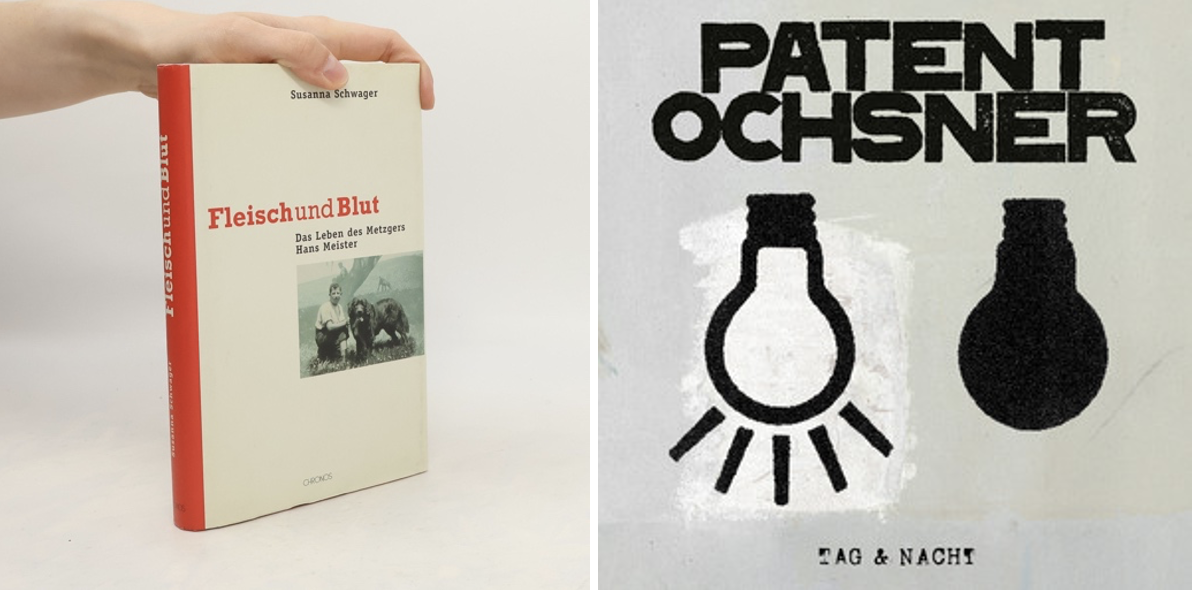
A book: Fleisch und Blut by Susanna Schwager
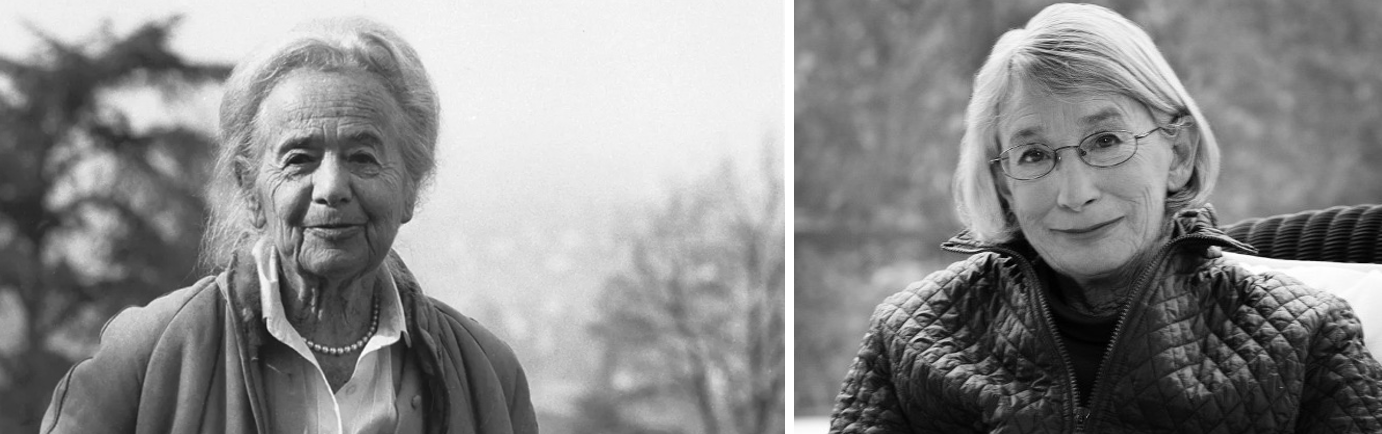
A poem: poems by Hilde Domin and Mary Oliver
A piece of music: Happy by Patent Ochsner
A work of art: No specific artwork comes to mind. But visually I often think of a house with many rooms. I think of life as a house with many rooms, corridors, corners, edges and niches. I think of writing as a house with many rooms, corridors, corners, edges and niches.
A technical tool: smartphone and laptop
Which artist do you return to again and again when you feel lost in the meaning of life?
Büne Huber. His word-images, his melancholy, his vulnerability, his courage, his melody and his imagery.
Vision for Time, Culture & Humanity
If you could suggest one change in how schools introduce young people to the subject of time, what would it be?
I would wish for death, dying, loss and grief to be part of formal education. Not as a peripheral topic, but as life knowledge. Those who understand finitude learn responsibility for their time.
What must humanity understand about time before we can change how we live?
That it is finite.
Closing Reflection
If you could speak to your younger self about time, presence and writing — what would you say?
Take your time. Listen very carefully, even between the lines. Trust. Your vulnerability is your strength. All is well. All will be well.
What new definition of time would you give to the world?
Time is not simply a river that carries us along. We can take the helm and fill time with meaning.