What if the real problem with creativity today is not lack of tools, but lack of time to think?
Origins & Creative Identity
When I was sixteen, a close friend and I entered a snowboard design competition organised by an international sports agency. We worked on our designs for nights in a row. We were completely immersed. I remember that we had no strategy, no calculation, just pure focus and joy.
We ended up winning, and the prize was a week of snowboarding on a glacier. But the real prize was something else. For the first time, I understood that design was not decoration. It was a state of being and expression. Time disappeared while we were creating. That experience planted a seed in me. I realised that creative work could become a language for how I move through life.
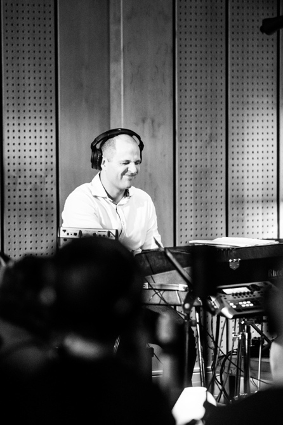
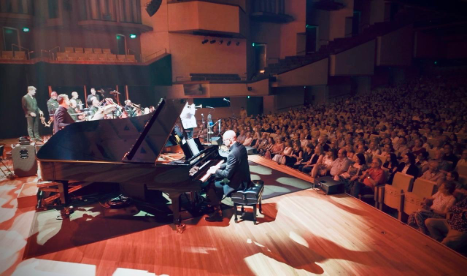
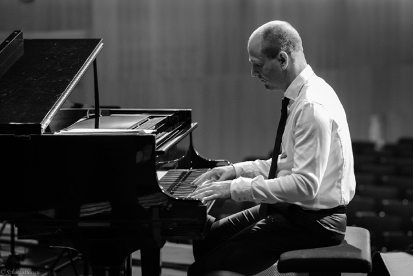
Around the same time, I was deeply involved in music and sports. I played classical piano concerts, performed with Big Band Liechtenstein and my funk band, and was active in athletics and football. Creativity and performance were always present. But looking back, I also see that achievement and expectation were part of the picture. Creativity was often connected to performance, not only to exploration.
Still, those early years gave me a strong foundation and a deep love for creating.
Why do so many creatives rush toward digital solutions?
I believe the digital revolution was driven by a very powerful promise: productivity. The idea that technology would make us faster, more efficient and more effective. Combined with very convincing marketing, this promise became almost unquestioned.
At the same time, there is a human desire for convenience. We like tools that simplify life. If something saves time, we adopt it quickly.
But there is a paradox. Dr. Hans Rusinek, a lecturer at HSG Life Design Lab, recently posted a thought that resonated with me: Despite exponentially more powerful technologies, productivity growth has stagnated since the 1970s. Robert Solow once said, “You can see the computer age everywhere but in the productivity statistics.” This observation is still relevant today.
In other words: What we gained in speed, we often lost in depth. We answer faster, but we think less deeply. We coordinate more, but we decide less clearly. Digital tools are not the enemy. I use them every day. The issue begins when we confuse acceleration with progress and optimisation with meaning.
Creatives rush toward digital solutions because the system rewards visibility and responsiveness. But reach is not the same as clarity. And clarity often emerges in environments that are more limited and focused — such as good old analog techniques.
How does society's pace affect how we appreciate art and music?
We are exposed to more art and music than ever before. The issue is not quantity, but digestion.
Music unfolds in time. Even a short song has tension, silence and development. Art requires attention. But our attention today is constantly interrupted. We rarely allow something to unfold without checking something else at the same time.
Scrolling trains us to move on quickly. Resonance, however, needs duration. If we do not stay long enough with something, it remains surface.
So yes, I believe we risk losing depth, not because art has become weaker, but because our capacity to stay with it has weakened. Sadly, that often compromises the transformational potential of art.
What feels true about analog processes like letterpress?
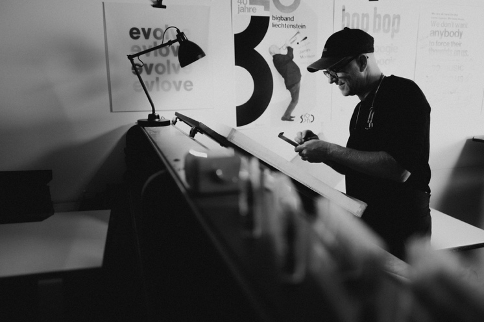
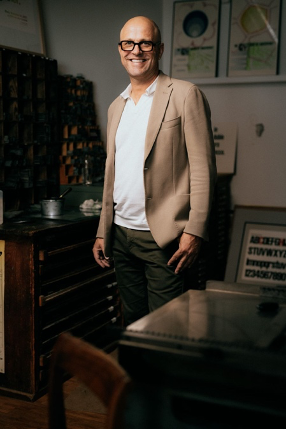
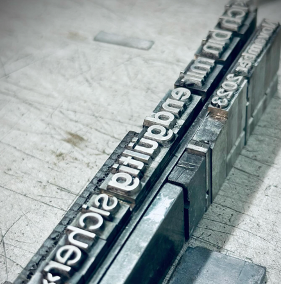
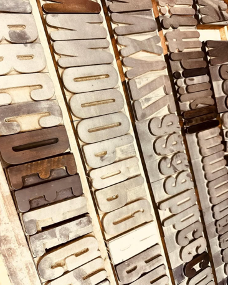
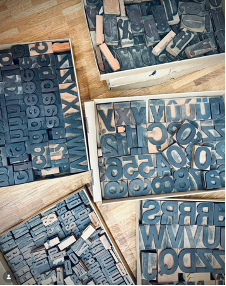
In my letterpress studio, decisions become physical. Ink meets paper. Once printed, it exists. There is no infinite undo button. This limitation forces clarity and responsibility.
Analog processes slow you down, but not in a nostalgic way. They create focus. They reduce distraction. They require presence.
When you compose letters by hand, you cannot scroll. You cannot jump between five tabs. No copy-pasting. You are fully there. That is why analog work often leads to deeper decisions. It creates well spent time.
Is there a danger that art becomes decorative rather than transformative?
Yes, there is that danger.
When creative ideas pass through too many filters and compliance layers, they often lose sharpness. What remains is aesthetically pleasing but emotionally neutral. Decoration is safe. Transformation is risky.
Culture evolves through tension and questioning, not through consensus alone. If we remove friction completely, we also remove growth.
Career Phases & Transitions
I see my career as a series of transitions rather than a straight line.
The first phase was formation. Learning craft, studying design, exploring music, discovering storytelling. At ArtCenter College of Design in Pasadena, I experienced one of the most intense creative periods of my life. Tradition and innovation existed side by side. That shaped me deeply.
After graduation, I entered a phase of expansion. I founded companies, built teams, worked internationally and won awards. It was an exciting entrepreneurial period.
Then came a transition into leadership and corporate responsibility. I took on strategic roles, led marketing structures and global processes. Externally, this looked successful. Internally, I slowly felt a growing distance from my creative core.
That realisation led to another transition. I stepped out, founded Coverstories, deepened my letterpress practice and studied Life Design. Today, I would call this phase integration. Music, design, entrepreneurship and personal development now inform each other.
Each transition changed my relationship with time. From performance-driven time to growth-driven time, and finally to what I now call well spent time.
Where did you feel you wasted time?
I would not say I wasted time, but I did experience misalignment.
There was a period where I became very competent at things that were not truly mine. I was managing creativity rather than living it. I was effective, but not fully connected.
The real loss of time was not inactivity, but distance from my own truth. Once I recognised that, I knew I had to realign. That required risk and uncertainty. But it brought my inner and outer timelines back into alignment.
What are you most grateful for?
I am most grateful for the freedom to transition. For the support of my family. Many of my biggest decisions were not driven by ambition, but by commitment. Returning to Liechtenstein after my studies was a decision for love. Reuniting with my wife back home was a timeless moment.
Gratitude is something I still practice consciously, because it changes how I invest my time. It makes me more intentional.
Sound, Image and Emotional Memory
Music speaks directly to emotion. It does not need explanation. You feel it physically. That is why people cry at concerts.
Images often engage the intellect first. Composition and symbolism are interpreted before they become emotional.
Film combines both. Sound and image unfold together in time. That is why cinema can create such strong emotional memory.
All three have shaped my private and professional life. The ripples they have created are highly emotional for me and resonate far beyond my own memories, defining my purpose.
What does big band jazz reveal about time?
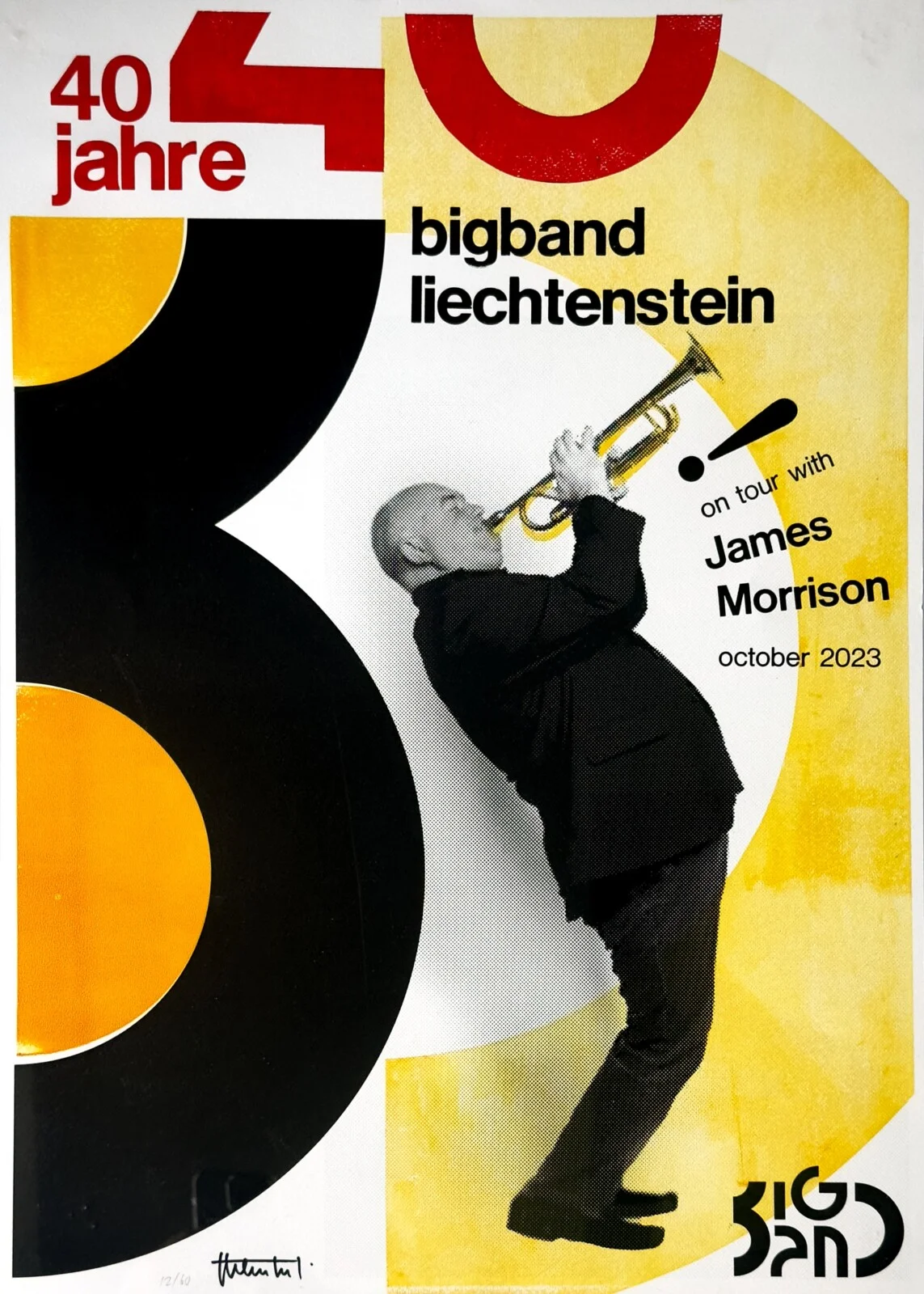
On stage during our Australia tour with James Morrison, right before my solo, he pointed at me and shouted, “Philipp, now let go.”
In that moment, time disappeared. You are inside the music and outside of it at the same time. There is no past or future, only presence.
Big band jazz teaches patience, listening and shared timing. It is collective awareness. It's intonation based on the beauty of imperfection — just like letterpress.
To get a sense of Philipp's musical work, watch: https://www.youtube.com/watch?v=8LTbkBOSQsQ
Creative Freedom and Responsibility
Responsibility begins with integrity. I once experienced a global branding process that was well designed and inclusive. Many people invested time and thought. In the end, a top-down decision replaced the collective outcome. The process became decorative instead of responsible.
Creative leadership means protecting the integrity of creative processes. It means respecting the time invested by others.
Personal Collection & Creative DNA
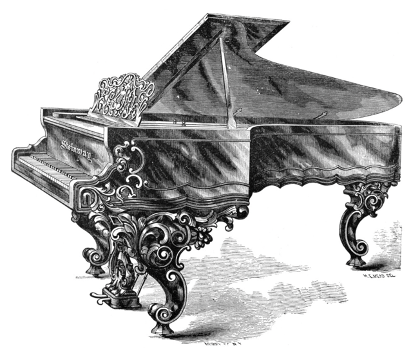
My Steinway grand piano would be there. It belonged to my father. I learned to play on it and listened to him play. It represents origin and transmission.
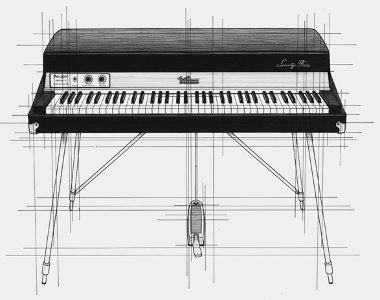
Next to it, an old, analog Fender Rhodes Piano (from the year 1973). Jazz, funk, soul. A slightly dirty, growling sound. It represents groove and imperfection.
Then the G.u.T. seal, which I carry in my heart. If I ever tattoo it, my son Joel would be the artist. It stands for alignment between spirit and action.
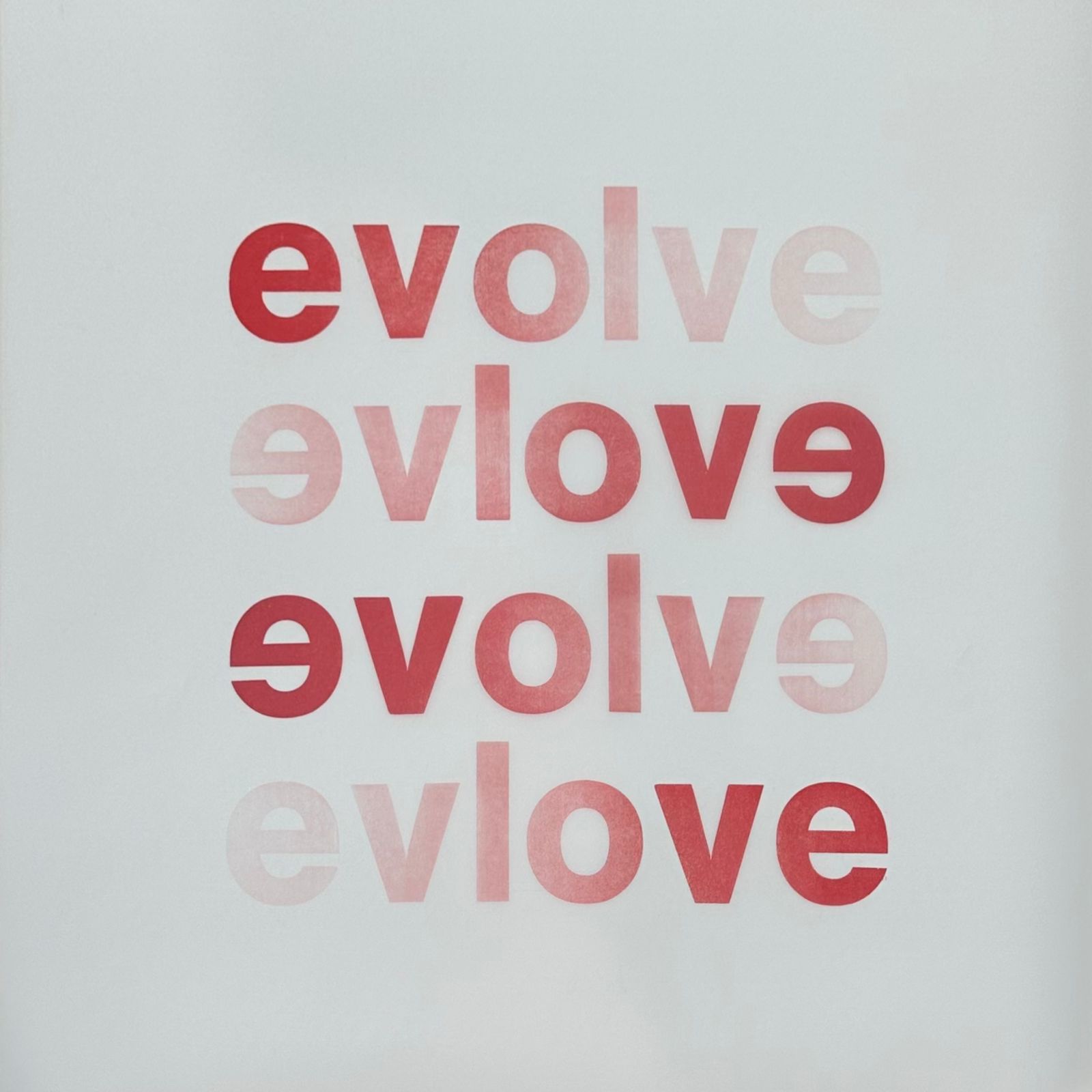
On the wall, a wooden type composition of “evolve,” mirrored to read “love.” That tension has shaped my life.
And finally, a coverstory with the names of my family. Not public, but foundational.
Rethinking Time
We need to shift from measuring time in output, to experiencing time in the abundance of now.
Well spent time is time that reflects your inner truth. I call this G.u.T. — Geist und Tat. Spirit and action in alignment.
My concrete impulse is simple: create a daily ten-minute G.u.T. routine. Ten minutes of deliberate creative action. Not consumption. Not scrolling. Creating.
Time should not only be counted in hours spent, but in resonance created. Some of the most transformative moments are short and timeless.
If creativity is not yet part of your life, invite it in. If it is already there, protect it and share it. Inspire others.
Creativity is when we let go, and enter flow.
And when we enter flow, we let grow.